


Getting Around Long Island Without a Car: Why Transit Equity Matters for All New Yorkers
What does it mean to be truly free to move within your own community? This fundamental question lies at the heart of Long Island's transportation crisis: a crisis that affects not just those without cars, but the very fabric of our democratic society.
In October, the Elmont Cultural Center joined communities across the nation in observing "Week Without Driving," an initiative designed to illuminate the daily struggles faced by those who cannot simply turn a key and drive wherever they need to go. The experience was revelatory, exposing gaps in our transportation infrastructure that many take for granted until they find themselves stranded at a bus stop, watching opportunity literally drive away.
The Reality of Car-Free Life on Long Island
Long Island's transportation landscape presents a paradox: a region served by 124 Long Island Rail Road stations, multiple bus systems, and ferry connections, yet fundamentally designed for those with private vehicles. The Long Island Rail Road, despite being the nation's largest commuter rail system by ridership, functions primarily as a Manhattan-bound express service, leaving vast stretches of suburban communities effectively isolated from one another.
Consider the immigrant family in Elmont who needs to travel to Suffolk County for a job interview, medical appointment, or to visit relatives. The journey requires navigating separate county bus systems: Nassau Inter-County Express and Suffolk County Transit: which operate as entirely disconnected entities. What should be a simple cross-county trip becomes an odyssey of transfers, lengthy waits, and premium fares that can quickly consume a day's wages.
The bus systems themselves tell a story of systematic neglect. Many stops lack basic amenities: no shelter from rain or snow, inadequate lighting for evening commutes, missing sidewalks that force riders to stand on busy roadways. These conditions are not merely inconvenient: they are dangerous, particularly for elderly residents, parents with children, and individuals with disabilities who have no alternative but to rely on these inadequate systems.
Lessons from Week Without Driving
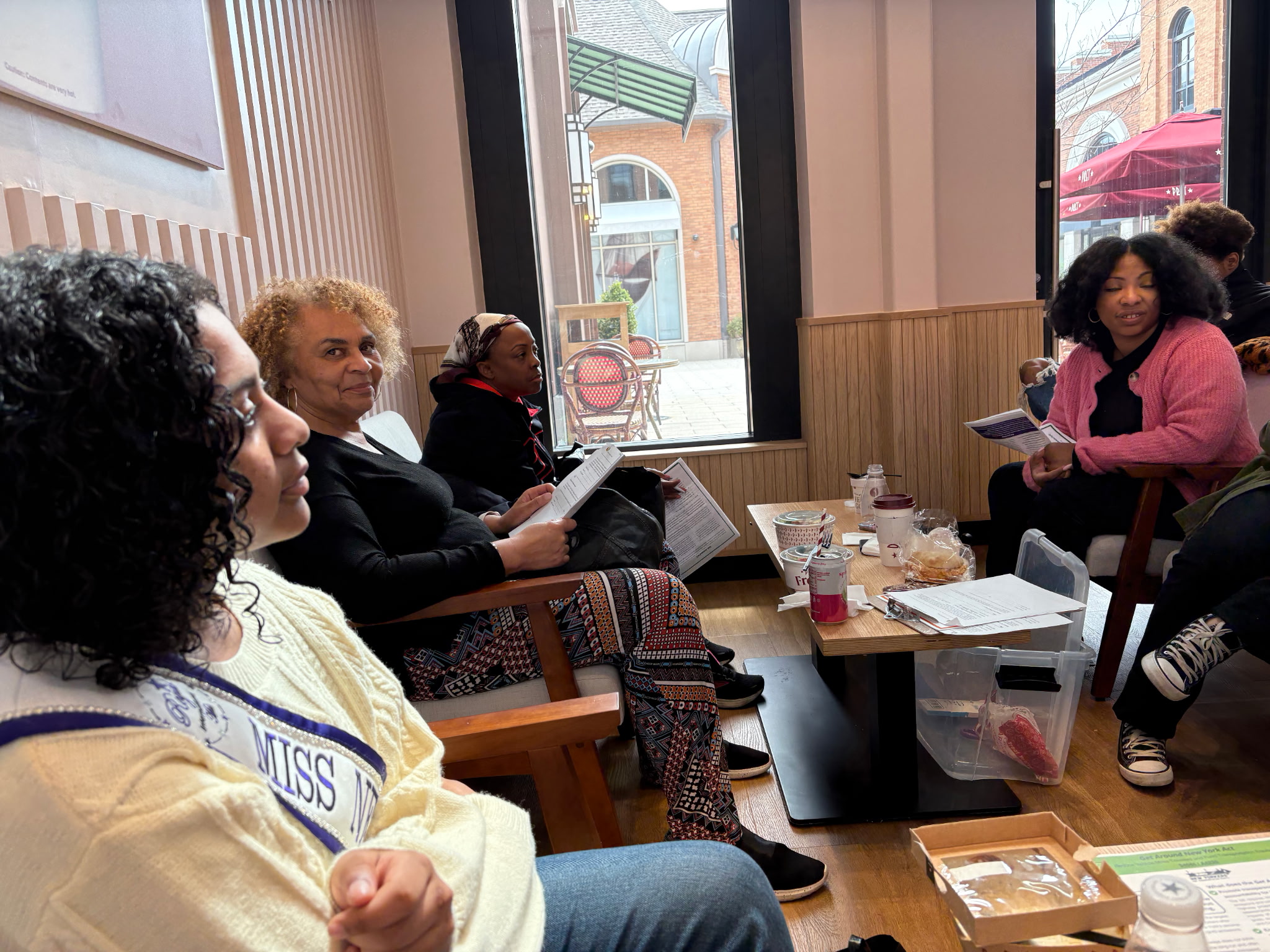
During our Week Without Driving observation, participants shared experiences that ranged from eye-opening to deeply troubling. One community member described spending four hours traveling to what should have been a thirty-minute medical appointment. Another recounted missing a job opportunity because the interview location was simply unreachable by public transit within the allocated time frame.
These stories illuminate a harsh truth: transportation inequity is not merely about inconvenience: it is about access to opportunity itself. When reaching the closest hospital takes three times longer by transit than by car, when job interviews become impossible to attend, when civic meetings occur at times and places inaccessible to those dependent on public transportation, we witness the erosion of democratic participation itself.
The Transit Equity Movement
Our partnership with New York for Transportation Equity (NYFTE) represents more than advocacy: it embodies a recognition that transportation is the infrastructure of freedom. NYFTE's Trust Equity campaign challenges the fundamental assumptions underlying Long Island's car-centric development patterns, demanding that federal infrastructure funding be redirected from highway expansion toward accessible, affordable public transit.
The movement's vision extends beyond mere service improvements. It calls for a reimagining of how communities connect, how opportunities are distributed, and how democratic participation is enabled or constrained by transportation policy. When NYFTE advocates for lower fares, more frequent service, and regional rail connections that serve all income levels, they are essentially advocating for a more equitable distribution of civic engagement opportunities.
The statistics reveal the depth of this inequity: the average Black resident in the New York region can access only 58% as many jobs using affordable transit options compared to premium services. This disparity represents more than economic inconvenience: it reflects structural barriers to full participation in community life.
The Immigrant Experience
For immigrant families and newcomers to our region, transportation barriers compound existing challenges of cultural adaptation and economic integration. Learning English, attending citizenship classes, accessing social services, finding employment: all of these essential activities require reliable transportation. When that transportation is unreliable, expensive, or simply unavailable, the pathway to full community participation becomes blocked.
The Elmont Cultural Center witnesses daily how transportation limitations constrain our community members' ability to engage in civic life. Cultural events, community meetings, educational opportunities, and volunteer activities become accessible only to those with cars or those willing to spend disproportionate time and money on complex transit journeys.
This reality raises profound questions about the nature of citizenship itself. If civic engagement requires transportation, and transportation is inequitably distributed, then civic participation becomes a privilege rather than a right. The implications extend far beyond individual inconvenience to challenge the foundational premise of democratic society: that all citizens should have equal opportunity to participate in community life.
Community Connections and Democratic Engagement
Transportation equity intersects with every aspect of community building that the Elmont Cultural Center seeks to foster. When community members cannot reliably travel to cultural events, civic meetings, or volunteer opportunities, the social fabric that binds neighborhoods together begins to fray. Isolation becomes involuntary, and community becomes fragmented along lines of car ownership and economic privilege.
The consequences ripple outward through generations. Children whose families cannot access after-school programs, cultural activities, or educational opportunities due to transportation barriers grow up with diminished connections to their broader community. The intergenerational transmission of civic engagement: the process by which young people learn to participate in democratic society: becomes interrupted by the simple inability to get from here to there.
A Question of Values
The current state of Long Island's transportation system reflects choices: choices about priorities, about who deserves access to opportunity, about what kind of community we seek to build. These choices have created a landscape where freedom of movement depends on economic privilege, where civic participation is constrained by car ownership, where community connections are severed by inadequate infrastructure.
The path forward requires acknowledging that transportation is not simply a matter of individual convenience but a public good essential to democratic society. It demands recognizing that every bus stop without a shelter, every missing sidewalk, every unaffordable fare represents a barrier to full community participation.
What would Long Island look like if transportation equity were the guiding principle rather than car-centric convenience? How might our communities change if every resident: regardless of age, income, ability, or immigration status: could access jobs, healthcare, education, and civic engagement opportunities with equal ease?
These questions do not demand immediate answers but rather sustained contemplation and collective action. The Transit Equity campaign, our partnership with NYFTE, and initiatives like Week Without Driving represent steps toward a more equitable future: one where transportation serves not just mobility but justice, not just convenience but community.
The choice before us remains clear: we can continue accepting a transportation system that divides our community along lines of privilege and access, or we can work toward infrastructure that truly serves all New Yorkers. The question is not whether we can afford to build equitable transportation: it is whether we can afford not to.
In the end, transportation equity is about more than buses and trains. It is about the kind of society we choose to build, the values we choose to embody, and the future we choose to create for all members of our community.
Comments